
Reviewed · CITY TOURS
Private Tour, Jerash and Amman City Tour
Jerash is the star here: a broad Roman city where you can walk past the Oval Colonnade, Temple of Artemis, theaters, fountains, and Hadrian’s Arch without spending a night outside Amman. I like that this is a private tour, so your group can set the pace, and I like the easy hotel pickup in an air-conditioned minivan.
The second strong point is the mix of sites. You get Jerash’s grand ruins, Amman’s hilltop Citadel, the Archaeological Museum, and the steep Roman Theater in one day. The main catch is that entry fees are not included, and the standard service is driver-led rather than a full guided tour, unless you add the Jerash guide option.
Key points at a glance
- Jerash in about three hours: See Hadrian’s Arch, the Hippodrome, Oval Forum, Temple of Artemis, Colonnaded Street, Nymphaeum, and theater ruins.
- Private transport from Amman: Ride in an air-conditioned minivan with hotel pickup, drop-off, bottled water, and WiFi on board.
- A useful first-day introduction: Combine Jordan’s most important Roman ruins with Amman’s Citadel and Roman Theater.
- Guide choice at Jerash: Explore independently or pay extra for a local guide, depending on the option you book.
- Flexible pace: Your group can ask for more time at a favorite stop, though the schedule still needs to cover a long northbound drive and several major sights.
- Strong service record: Drivers including Yusuf, Mohammad Bardaghawi, Mo, Saadah, and Abu Anas are singled out for punctuality, kindness, local tips, and comfortable vehicles.
Why Jerash deserves the first half of your day
The drive from Amman to Jerash covers about 31 miles, or 50 kilometers, heading north through Jordan’s rocky countryside. The trip usually takes about an hour, depending on traffic, and the private vehicle makes the ride far simpler than arranging separate taxis or buses.
Jerash was founded in the Hellenistic period and grew greatly under Roman rule after the Roman conquest in 63 BC. It became one of the Decapolis cities, a group of important cities in the eastern Roman world. The ruins are unusually open and readable, so you can get a sense of how streets, temples, public buildings, and entertainment spaces fit together.
You begin near Hadrian’s Arch, built around AD 130 to mark Emperor Hadrian’s visit. It is an impressive entrance, but do not stop there and assume you have seen Jerash. The real pleasure comes from walking deeper into the site, where the scale grows with every turn.
The Hippodrome gives you a glimpse of the city’s public life. This large sporting arena could hold about 15,000 people, and its size helps explain that Jerash was not a small outpost. It was a major urban center with trade, ceremonies, races, and public gatherings.
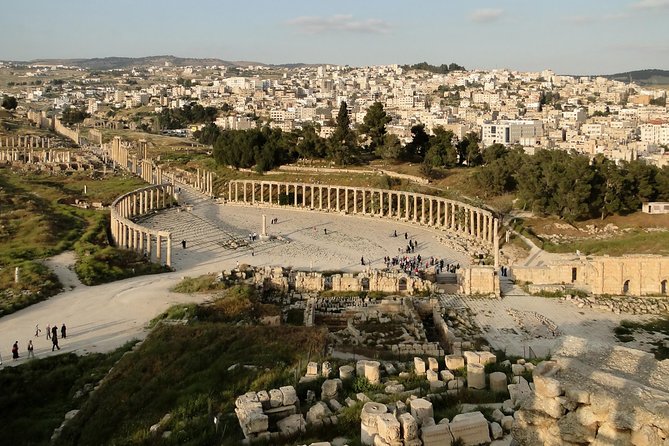
The Oval Forum is one of the most memorable spaces. Its unusual shape, framed by a sweeping colonnade, makes an excellent photograph and a useful place to pause. From here, the streets and columns lead your eye toward the city’s main route.
The Temple of Artemis is another major stop. Its Corinthian columns rise about 39 feet, or 12 meters, and the remaining structure gives you a clear idea of the temple’s original scale. The temple was dedicated to Artemis, and its surviving columns are among Jerash’s most striking features.
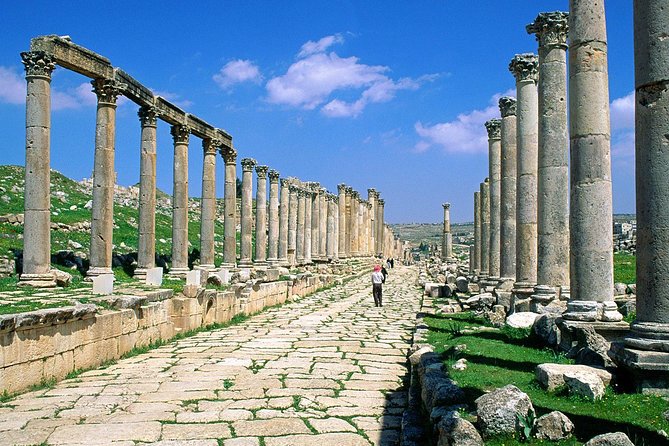
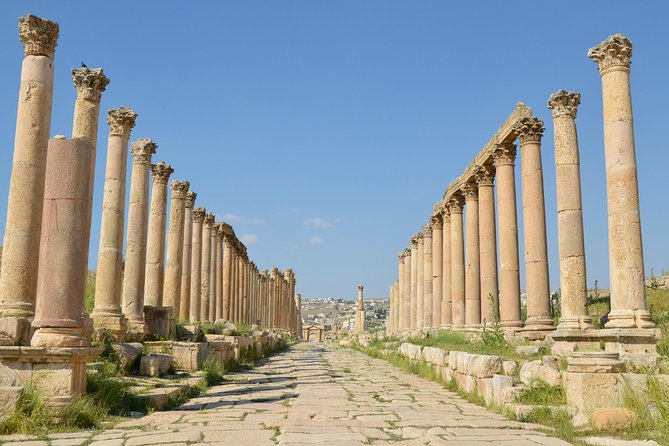
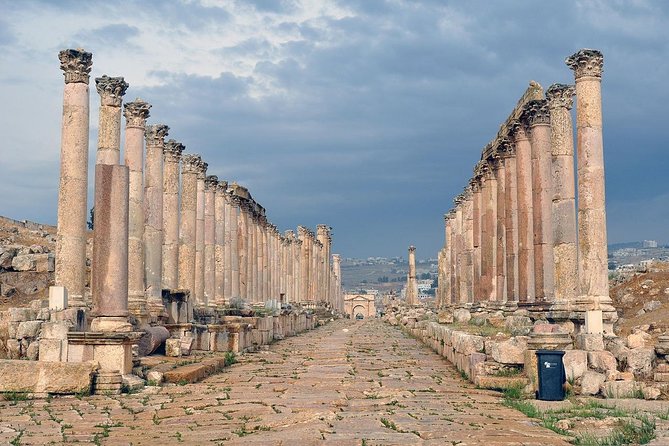
Continue down the Colonnaded Street toward the Nymphaeum, an ornamental fountain that once supplied water and decorated the city center. The long column-lined route can feel exposed, especially under strong sun, so bring water, use the supplied bottle, and plan on walking at a steady but comfortable pace.
Jerash also includes theaters. The South Theater, built in the second century AD, could seat about 5,000 people and is still used for performances. A musical demonstration with bagpipes has been enjoyed during some visits, but it should not be treated as a guaranteed part of every departure.
More City Tours in Amman
- Amman Private City Tour & more.
★ 4.5 · 66 reviews - Airport pickup or drop off transfer from or to Amman city
★ 5.0 · 59 reviews - Amazing Panoramic Amman City Tour
★ 4.5 · 57 reviews
Independent exploring or a local guide at Jerash
The tour gives you a useful choice. You can explore Jerash independently, which suits people who enjoy wandering, taking photographs, and stopping whenever a column or carved detail catches their eye. You can also upgrade to include a local guide at Jerash, which is the better pick if you want the ruins explained as you move through them.
The standard service is best understood as private transportation with a driver who may provide useful commentary, not as a full-time archaeological guide. That distinction matters. Several drivers are praised for explaining local culture, history, and practical matters, but the level of formal site interpretation can vary by driver and option.
Names that appear repeatedly in the service feedback include Yusuf, Mohammad Bardaghawi, Mo, Saadah, and Abu Anas. Yusuf is noted for arriving on time, discussing the sites and city, and offering restaurant and sightseeing suggestions. Mohammad Bardaghawi is praised for friendly service, cultural information, and effort to make the day comfortable. Saadah is specifically described as polite and able to speak good English.
If the ancient details matter most to you, pay for the local Jerash guide. If you mainly want reliable transport, a flexible day, and a helpful local driver, the driver-only version can work well. Confirm exactly what your selected option includes before you pay.
Amman Citadel, where the city opens below you
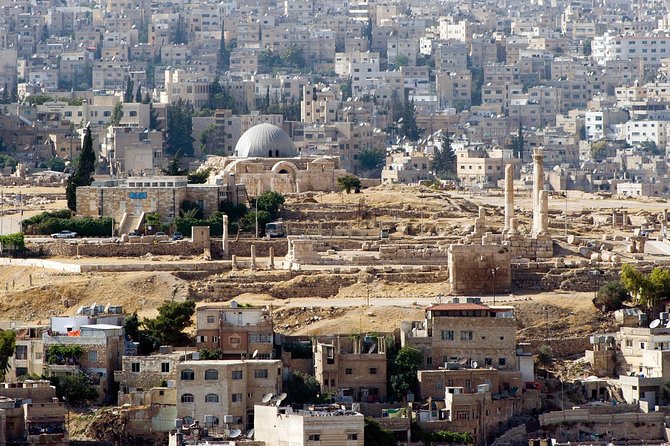
After Jerash, you return to Amman for the city’s classical highlights. The Citadel sits on a hilltop and gives you wide views across Amman. The setting helps you understand the city’s distinctive shape, with dense neighborhoods spreading over a series of hills and valleys.
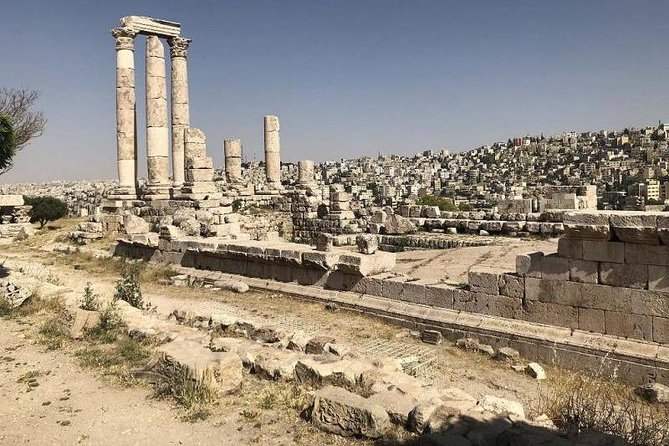
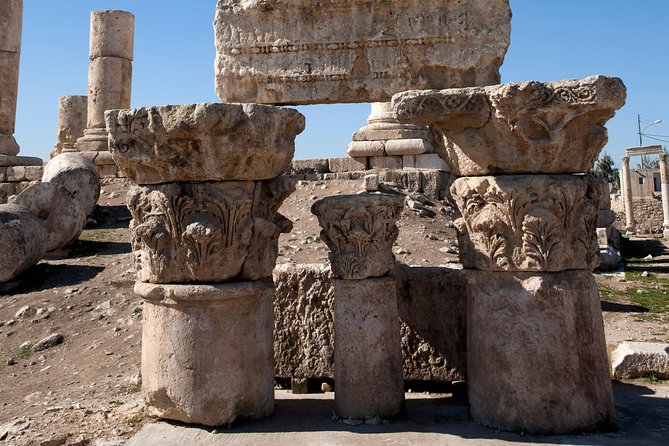
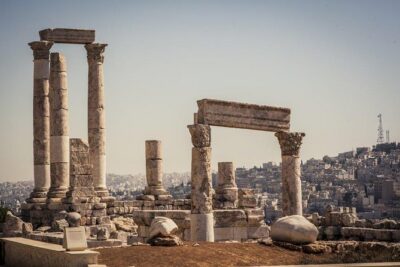
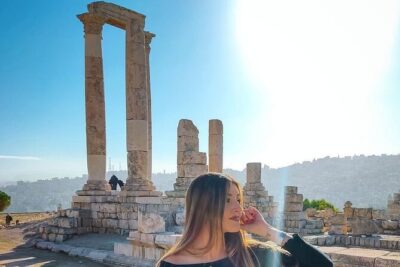
The site contains remains from several periods, including Roman, Byzantine, and early Islamic times. The Roman Temple of Hercules dates from the second century and is one of the clearest reminders of Amman’s ancient importance. Its surviving columns and scattered stonework require some imagination, but the hilltop position makes the visit worthwhile even before you study the details.
The Umayyad Palace adds another layer. This crumbled complex of royal buildings dates from the eighth century, when Amman was part of the Islamic world ruled by the Umayyad dynasty. Its remains show that the city continued to matter after the Roman period, rather than simply fading away when classical rule ended.
The Archaeological Museum is included in the Citadel visit. Its displays contain classical and Islamic finds from across Jordan, giving you objects and smaller details that the large ruins cannot provide. I find a museum visit especially useful after Jerash because it can help connect isolated stones, statues, tools, and artifacts with daily life.
Allow roughly two hours for the Citadel portion, although your actual time depends on traffic, walking speed, and how long you spend at the museum. The hilltop site involves walking over uneven archaeological ground, so practical shoes are a better choice than polished footwear.
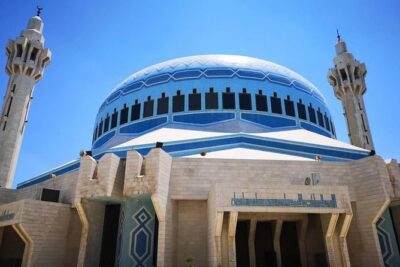
The broader city itinerary also lists the King Abdullah I Mosque and Souq Jara. These may be included as part of the wider Amman sightseeing plan, but the core ancient stops are the Citadel, museum, and Roman Theater. If the mosque or market is especially important to you, ask the driver how much time is available on the day.
The Roman Theater and downtown Amman
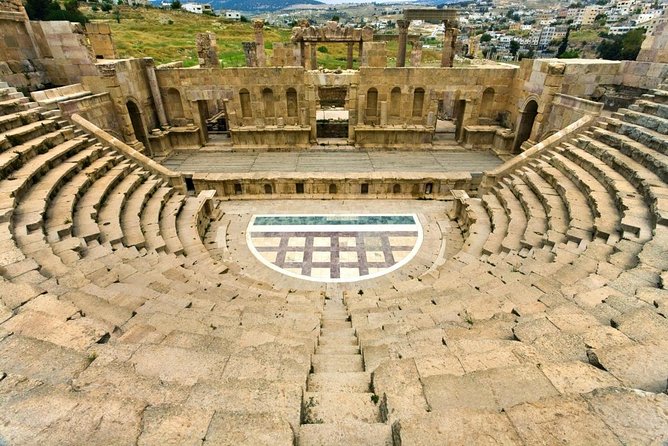
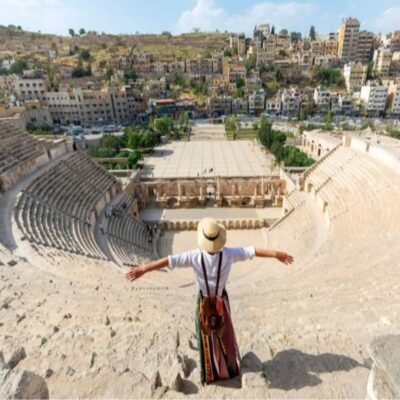
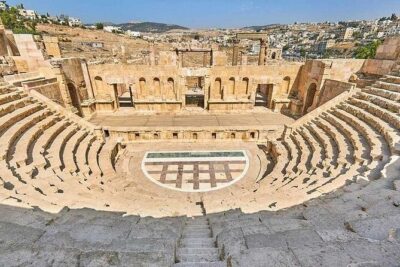
The Roman Theater is below the Citadel in downtown Amman. Carved into the hillside of Jabal Al-Jozfah, it was built around AD 161 during the reign of Emperor Antoninus Pius and held about 6,000 people.
The theater is steep. Its 44 tiers of limestone seating rise sharply above the stage, so you can look down across the performance area and back toward the city. The climb is part of the experience, but it can be tiring after several hours at Jerash and the Citadel.
Look at the stage facade, with its Corinthian columns and carved decoration. The building was made for public entertainment and gatherings, but its later use changed. It served as a Christian church during the Byzantine era and later became a marketplace under Ottoman rule.
The itinerary allows about 30 minutes here. That is enough for a walk through the seating, a few photographs, and a look at the stage, but not enough for a long, slow exploration. The theater is one of the places where a private tour helps, since you can ask for a little more time if the rest of the schedule allows.
The day finishes with a closer look at Amman’s traditional souks. This is a useful change after the formal ruins. You can see the city as a working place, not only as an archaeological destination, and you might find spices, handicrafts, and local goods. The listed program also refers to Souq Jara, a traditional market with local products, though the exact market stop should be confirmed with your driver.
More City Tours in Jerash
- Full Day Tour in Jerash and Amman City from Amman
★ 5.0 · 26 reviews - Private Full Day Jerash and Amman City Sightseeing Tour
★ 4.5 · 16 reviews - Full Day Tour in Jerash and Amman City
★ 5.0 · 15 reviews - From Amman: Full day Jerash and Amman city Tour
★ 4.7 · 11 reviews
What the private format really adds
A private tour is most valuable when your group has different interests. One person can spend extra time photographing the columns while another focuses on the theater or museum. You are not tied to the walking speed of a large group, and the driver can often adjust the order or timing within reason.
The minivan also matters because this day includes a long out-and-back drive, several archaeological sites, and city traffic. Air conditioning, bottled water, and onboard WiFi are practical comforts. Hotel pickup and drop-off remove the need to find a meeting point before sunrise or arrange a taxi home after a full day.
The service is advertised at $83 per person. That price is easier to justify for two or more people sharing a private vehicle, especially when you value hotel transfers, flexibility, and a direct route to Jerash. It is less attractive if you are a solo visitor focused only on the lowest possible cost.
Do not forget the separate admission costs. Site entry is not included in the base price, and the local Jerash guide is optional. One useful cost tip is to consider the Jordan Pass, which one driver specifically recommended because it can cover entry fees at several Jordanian sites. Check the current pass terms and whether it suits your full Jordan itinerary before buying it.
Timing, comfort, and small practical concerns
The experience is described as about seven hours, with the available duration listed more broadly as five to eight hours. In practical terms, expect a full sightseeing day with about an hour each way to Jerash, roughly three hours at the ruins, about two hours around the Citadel, and a shorter Roman Theater stop.
That schedule is efficient but not leisurely. Jerash is large, and three hours can pass quickly if you stop often. If you want detailed explanations at every monument, the local guide upgrade is sensible. If you want time for a relaxed lunch or extended shopping, ask how that will affect the planned stops.
Most people can take part, but the route includes hills, stairs, uneven stone, and the steep seating at the Roman Theater. The Citadel and theater also require walking after you have already spent hours outdoors at Jerash. Wear shoes with a firm sole and carry sun protection.
The private setting can also make the day feel more personal. One driver helped with restaurant suggestions and other places to visit, while another was described as an extra guide who answered questions and looked after the group. A driver even provided snacks during one outing. These touches are not guaranteed, but they show why the individual driver can shape the experience.
There is one important service warning. One booking was described as missing the Roman Theater, while other accounts specifically included it. At pickup, confirm the day’s route: Jerash, Citadel, Archaeological Museum, Roman Theater, and any additional Amman stops you care about. That simple check can prevent confusion.
Who should book this Jerash and Amman day tour?
I would choose this tour if you are staying in Amman and want to cover the two major sightseeing priorities without changing hotels. It suits first-time visitors who want a clear introduction to Roman Jordan and modern Amman in one outing.
It is also a good match for families or small groups that want their own vehicle, hotel pickup, and some control over the pace. The private format is more comfortable than joining a large coach, and the drivers are often willing to answer questions and offer local suggestions.
I would think twice if you want a formal history lesson at every stop but do not plan to add the Jerash guide. I would also compare prices if you are alone and do not value private transport. Finally, build entry fees into your budget, or check if the Jordan Pass makes sense for your wider route.
Should you book it?
Book it if you want a practical first day in Jordan that combines Jerash’s grand Roman remains with Amman’s Citadel and theater. The strongest reasons are the private minivan, hotel service, flexible pace, and the chance to ask for a local Jerash guide.
Before booking, select the guide option carefully, confirm that entry fees are understood, and ask the driver to verify the Roman Theater stop. With those details settled, this is a well-planned way to see a large amount of Jordanian history in one manageable day.
FAQ
How long does the Jerash and Amman tour last?
The tour is described as approximately seven hours, with the available duration listed as five to eight hours. The schedule includes about three hours at Jerash, two hours around the Citadel, and about 30 minutes at the Roman Theater, plus driving time.
Is hotel pickup included?
Yes. Hotel pickup and drop-off in Amman are included, along with private transportation in an air-conditioned minivan.
Are admission fees included in the price?
No. Entry fees to the sites are not included in the base tour price. You can consider the Jordan Pass if it fits your wider Jordan plans.
Is a guide included at Jerash?
A local guide at Jerash is optional. You can choose to explore independently or select the tour option that includes a guide.
What sites are visited in Amman?
The main Amman stops are the Citadel, the Archaeological Museum, and the Roman Theater. The wider sightseeing plan also lists the King Abdullah I Mosque and traditional souks, including Souq Jara.
Can I cancel the tour for a full refund?
Yes, if you cancel at least 24 hours before the experience start time. Cancellations made less than 24 hours in advance are not refunded, and changes within that period are not accepted.
Just added around Amman
- Jerusalem & Bethlehem Full-Day Tour from Amman or Dead Sea★ 5.0 · 5 reviews
- Amman Airport Pickup Or Drop off -To Or From Dead Sea★ 5.0 · 4 reviews
- From Petra to Wadi Rum, then back to Amman or the airport.★ 5.0 · 16 reviews
- Private Transfer From Petra to Amman or Airport With Optional★ 5.0 · 4 reviews
- Private Departure Transfer: Petra Hotels to Amman Airport★ 5.0 · 4 reviews
- Amman and Aqaba airport lift to Petra and Wadi Rum★ 5.0 · 11 reviews
- Private Departure Transfer: Dead Sea Hotels to Amman Airport★ 5.0 · 10 reviews
- Queen Alia Airport Transfers From / To Amman, Petra, Dead Sea.★ 5.0 · 3 reviews
City Tours, compared.
Private Full Trip of Madaba City Mosaics,Mount Nebo,Dead Sea & Amman Sightseeing
Read our review →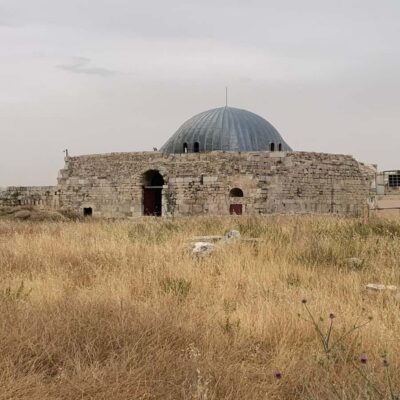
Full Day Tour in Jerash and Amman City from Amman
Read our review →Browse the lists this tour appears in