
Reviewed · AMMAN TOURS
Départ Garanti Francophone (GIR) SAMEDI – SAMEDI
Petra and Wadi Rum are the heart of this eight-day Jordan trip. You get the famous rose-colored Nabataean city, a 90-minute 4×4 ride through red desert valleys, and a night in a Bedouin camp, all wrapped into a single route that also covers Amman, Jerash, Madaba, Mount Nebo, Kerak, and the Dead Sea.
I like the permanent French-speaking guide, which gives the tour a clear thread from one ancient site to the next. I also like the useful package of included entries, transport, meals, airport transfers, and hotels, rather than having to arrange each piece on the road.
The main consideration is pace. You cover a lot of ground in seven touring days, and some days include several stops plus long drives. A maximum group size of 150 is also possible, so this is better for someone who values convenience and coverage over a small, flexible group.
Key points to know before booking
- Petra gets a full six-hour visit, giving you time for the Siq, the Treasury, and the main archaeological area.
- Wadi Rum includes a local Bedouin 4×4 ride, lunch at camp, dinner, and an overnight stay under tents.
- French-language support continues throughout the sightseeing days, with guides associated with the program including Abdelrhman Bawaneh and Firas.
- The price includes six lunches and six dinners, plus seven breakfasts, listed entry fees, transport, and airport assistance.
- The itinerary reaches Jordan’s eastern desert castles, including Qasr Al-Harranah, Quseir Amra, and Azraq.
- The week ends at the Dead Sea, with free time for swimming and a slower final touring day.
What the $875 price really covers
At $875 per person, this tour offers solid value if you want a ready-made Jordan trip. The cost includes airport pickup and departure assistance, modern air-conditioned transport, a French-speaking guide during sightseeing, the entry fees named in the schedule, seven breakfasts, six lunches, and six dinners.
It also includes the Bedouin 4×4 excursion for about an hour and a half. That matters because desert rides can otherwise become an extra charge once you arrive.
Airfare, drinks, insurance, customary tips, the optional horse-drawn carriage at Petra, and any New Year’s Eve celebration are not included. You should also allow for a single supplement if you need your own room.
The value is strongest for a first visit. You do not need to compare hotels, arrange an intercity driver, or work out how to connect Petra, Wadi Rum, and the Dead Sea. The tradeoff is less personal control. With a possible group size of 150, the experience may feel more like a standard escorted tour than a private Jordan journey.
A few more Amman days worth weighing up
- Amman Petra Full-Day Trip
★ 5.0 · 270 reviews - Amman Walking Tour: Hidden Gems, Culture & Street Food
★ 5.0 · 241 reviews - Joyful Roads Private Car Service
★ 5.0 · 145 reviews
Day 1: A simple arrival in Amman
Your first day is deliberately easy. You are met at Queen Alia International Airport, assisted before customs, and transferred to your hotel in Amman for dinner and the night.
The scheduled start time is 8:00 am at the airport, so check your arrival details carefully. The first evening gives you little sightseeing time, but that is sensible after a flight. You will want the rest before the early archaeological stops that follow.
Airport help is useful here, particularly if you are arriving in Jordan for the first time. The transfer also removes the need to negotiate transport immediately after landing.
Day 2: Amman’s hilltop ruins and the eastern desert
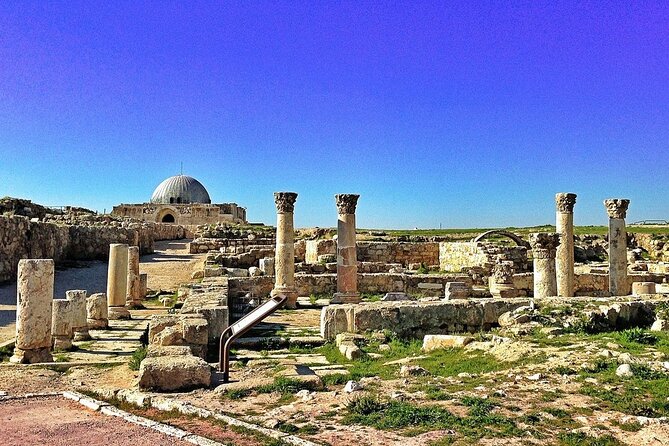
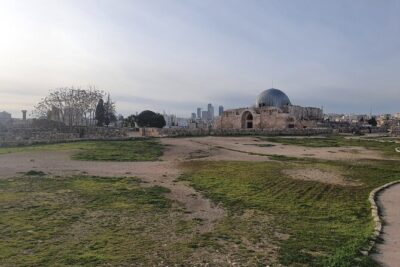
Amman begins at the Citadel, or Jabal al-Qalaa. From this compact hill, you look over the capital’s pale limestone buildings and crowded streets. The site brings together Roman, Islamic, and earlier remains, with ruins of a temple, a palace, and other structures spread across the summit.
The National Archaeological Museum is also here. The visit is scheduled for about an hour, enough to see the principal remains and enjoy the city views without turning the morning into a long museum session.
Next comes the Roman Theatre, the most imposing surviving monument from ancient Philadelphia. It once held about 6,000 people, and its steep stone seating still gives you a clear sense of the scale of Roman public life. The nearby Odeon and the remains of the colonnaded forum help explain how the theatre once fitted into a larger civic center.
The afternoon shifts sharply from city ruins to the eastern desert. Qasr Al-Harranah sits about 55 kilometers from Amman. Its heavy, compact design has led historians to discuss two possible roles, a military building or a caravan stop. You can look at the thick walls and simple plan and understand why its purpose remains debated.
Quseir Amra is a smaller and more refined building. This early eighth-century desert retreat, built under Caliph Walid I, is known for its paintings and rounded, light-colored structure. Its setting beside a usually dry wadi makes the stop feel far removed from Amman.
The final stop is Qasr Al-Azraq, a fortress damaged by the 1927 earthquake. Its history reaches back through different periods, and the central mosque and inscription help date later rebuilding. This is a long day, with five stops and considerable driving, but it gives you a side of Jordan that many short visits skip.
Day 3: Roman Jerash and Saladin-era Ajloun
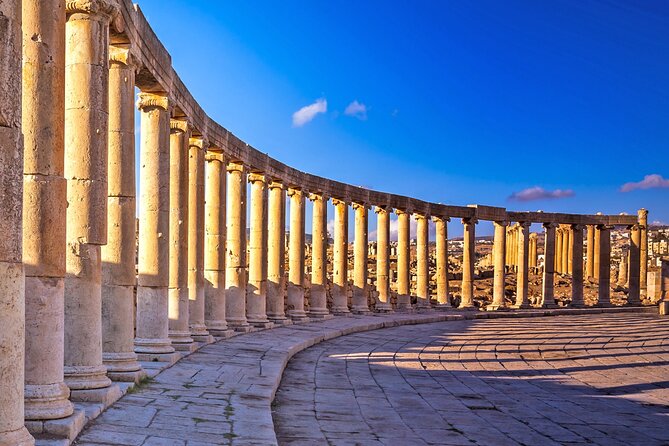
Jerash is one of the strongest stops on the entire route. About 45 kilometers from Amman, the ancient city preserves an impressive Roman plan, including colonnaded streets, temples, theaters, and open civic spaces.
The site was covered by sand for centuries before excavation and restoration began. The warm pink and orange limestone looks especially striking in low morning or late afternoon light. Allow yourself the full three hours. Jerash is not a quick photo stop, and its broad avenues make comfortable walking shoes worthwhile.
The scale can be surprising. Rather than one isolated ruin, you move through the remains of a functioning city with formal streets and public buildings. Your guide is particularly useful here, since the columns and broken walls make more sense when you understand how the city was organized.
After lunch, you continue to Ajloun Castle. Built in the 12th century during the time of Saladin, the fortress helped defend the region, control nearby iron mines, and block Crusader movement toward Jerusalem. The castle sits high above the surrounding valleys, and the views are one of the main rewards of the climb.
The day combines two very different kinds of historic sites. Jerash is open, spacious, and urban. Ajloun is compact, defensive, and vertical. The castle visit lasts about two hours, and uneven surfaces plus stairs make the stated moderate fitness level relevant.
You return to Amman for dinner and the night. This is another full day, but the route is well balanced in terms of subject matter.
Same corner of Jordan, a completely different kind of day:
- Multi day tour in Jordan – 08 Days
★ 5.0 · 137 reviews - Amman: Culture, History, Tradition & Food Day or Night Tour
★ 5.0 · 124 reviews - Jordan Tour: Private Driver – Luxurious car
★ 5.0 · 88 reviews - Private Walking Tour in Amman With Local
★ 4.5 · 77 reviews
Day 4: Madaba mosaics, Mount Nebo, and Kerak
The drive south follows the historic King’s Highway, with stops in Madaba and at Mount Nebo before reaching Kerak.
Madaba is famous for its Byzantine mosaics. At Saint George’s Church, you see the sixth-century mosaic map of the Holy Land. It originally measured about 25 meters by 5 meters and used roughly two million tesserae. The surviving section is not complete, but it remains one of the most useful visual records of the Byzantine Near East.
The church visit is scheduled for about two hours. Take time to study the small pieces of colored stone rather than treating the map as a single floor decoration. The detail gives the site its force.
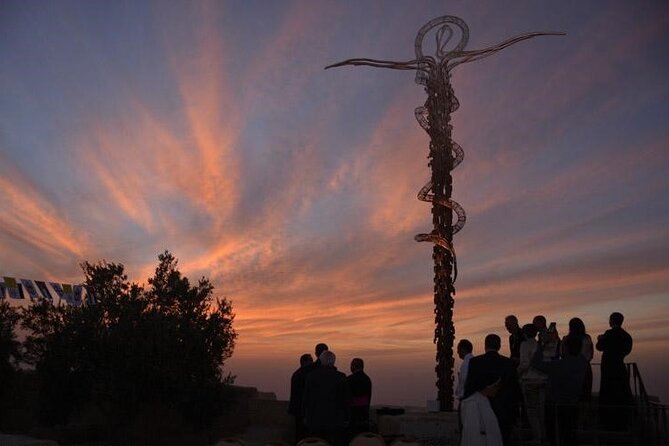
Mount Nebo rises to about 840 meters and is traditionally associated with the place where Moses saw the Promised Land before his death. It became a pilgrimage site early in the Christian era. On a clear day, the summit offers wide views toward the Jordan Valley and the area around Jericho, although visibility depends on conditions.
The final major stop is Kerak Castle. This Crusader fortress was built in the 12th century above the Wadi Kerak, along an important route into Palestine. Its long history includes the rule of Frankish lords, the campaigns of Renaud de Châtillon, the fall of Jerusalem in 1187, and Saladin’s later efforts against the fortress.
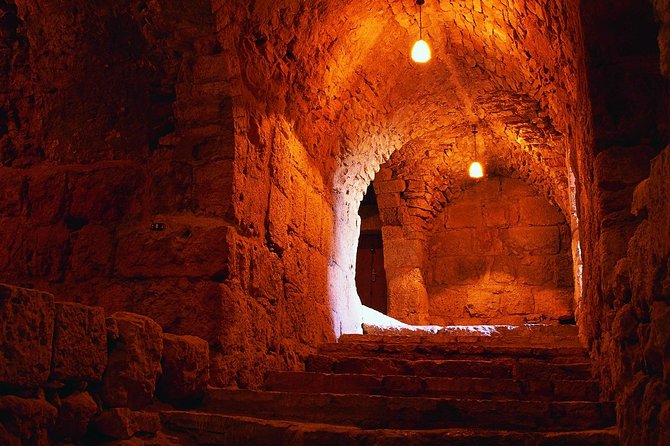
Kerak is best approached as a place to explore, not just admire from outside. Passageways, chambers, heavy walls, and changes in level show how a medieval stronghold worked. Some areas can be dark and uneven, so sensible footwear and a little caution help.
This is one of the most historically packed days. It is also one of the days most likely to feel rushed if you linger at every stop. The guide’s explanations help you decide where to spend your limited time.
Day 5: A full day among Petra’s sandstone cliffs
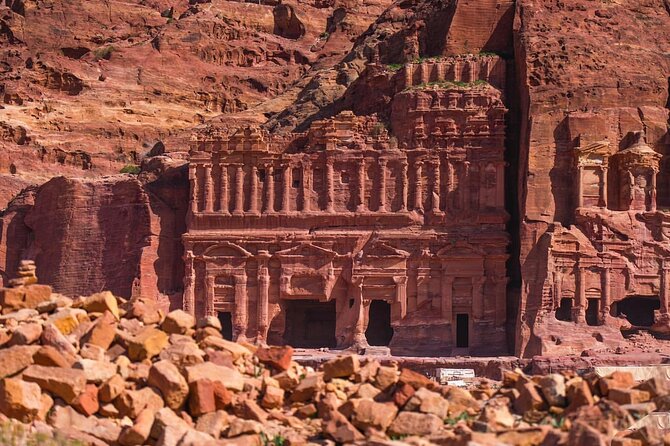
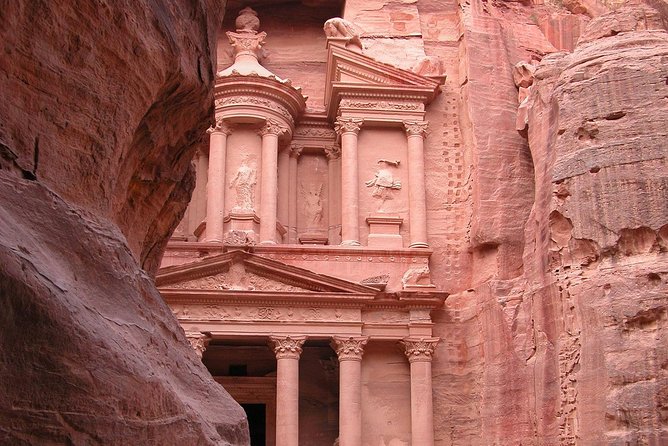
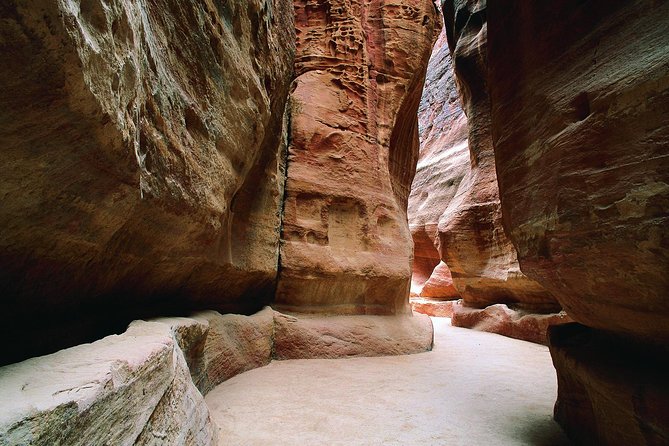
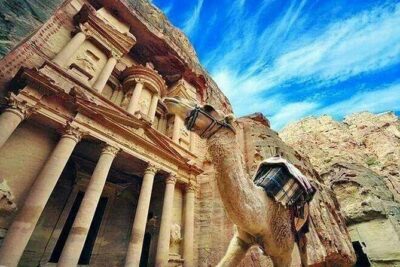
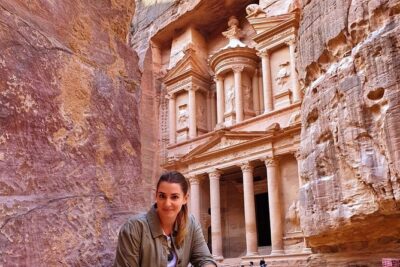
Petra receives six hours, which is a major strength. The approach through the narrow Siq builds anticipation, then the Treasury appears between the cliffs in one of Jordan’s most memorable reveals.
You continue into the wider archaeological area, where carved tombs, facades, temples, and pathways show how the Nabataeans shaped the stone around them. Petra is not one monument. It is a large site, and six hours lets you see more than the entrance area before returning to your hotel.
The schedule includes breakfast, lunch at a local restaurant, dinner, and a hotel night. That makes the day easier, since you do not need to interrupt your visit to search for meals.
Expect plenty of walking, uneven ground, sun, and time on your feet. The optional horse-drawn carriage is not included, so ask about its cost before accepting the service. You may find the route manageable on foot, but the full site can be tiring, especially in warm weather.
Petra is also the point where a guide can add real value. The stone facades are visually powerful, but names, dates, and Nabataean design details can otherwise blur together. A French-speaking guide keeps the explanations accessible and helps connect Petra with the desert trade routes and other sites seen during the week.
Day 6: Little Petra and a night in Wadi Rum
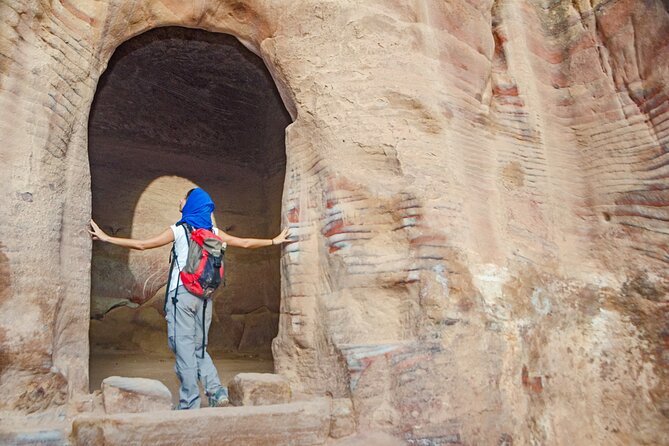
The route continues to Little Petra before heading to Wadi Rum. Little Petra is smaller and less extensive than the main site, but its carved spaces provide another look at Nabataean building and settlement patterns.
Wadi Rum changes the mood completely. Here, the scenery is shaped by cliffs, peaks, open valleys, and silence rather than carved facades. The area is closely linked with the Arab Revolt and with the film Lawrence of Arabia, but the best reason to visit is the sheer scale of the desert setting.
A local Bedouin 4×4 ride lasts about 90 minutes. That is long enough to reach several desert viewpoints and experience the rough tracks without making the whole day a vehicle excursion. The ride is included, which is important when comparing the price with other Jordan packages.
Lunch is served at a Bedouin camp, followed by dinner and a night under tents. This is the most distinctive overnight of the week, though you should choose it with realistic expectations. A tented camp is not the same as a conventional hotel, and comfort levels may vary. The schedule confirms the tent stay but does not specify the facilities.
The open desert can be cool after sunset even when daytime temperatures are high. Pack one warm layer, and keep your camera and small essentials close during the 4×4 ride.
Day 7: From the Araba road to floating in the Dead Sea
After breakfast at camp, you travel via the Araba road toward the Dead Sea. At roughly 1,306 feet below sea level, this is the lowest point on Earth, and the surrounding mountains and hills give the water an unusual setting.
The afternoon includes lunch and free time for swimming. The Dead Sea is famous for its dense salt water, which makes floating easy, and for mineral-rich mud and water. Keep the practical side in mind: avoid getting water in your eyes, and do not treat a swim as a long open-water session.
This is a welcome pause after Petra, Jerash, and the fortress visits. You have time to slow down before the final airport transfer, although the schedule does not specify a particular resort or bathing facility. Bring swimwear and protect any cuts from the salt water.
The Dead Sea day is included without an admission charge, while transport and meals remain part of the tour package. It gives the itinerary a gentler finish than another archaeological site would.
Day 8: Departure from Amman
After breakfast, you are transferred to the airport with assistance during departure formalities. The tour ends here.
The program does not provide a late checkout or extra Amman sightseeing on this day. If your flight leaves late, any additional time in the capital will need to be arranged separately.
The guide, group size, and daily pace
A permanent French-speaking guide is central to the experience. Guides named in the guest material include Abdelrhman Bawaneh, described as passionate and engaged, and Firas, who was associated with a seven-day Jordan program covering many of the same sites.
You should confirm your assigned guide and exact hotel details before departure, since names can change. The important point is that French-language guidance is planned for the sightseeing days, not only for one or two excursions.
The maximum group size is 150. That is a large ceiling, and the actual group may be smaller, but you should be comfortable with a coach-style format. Large groups make transport and meal planning simple, yet they can slow down loading, entrances, and meeting points.
The schedule calls for moderate physical fitness. You will walk through Roman ruins, climb around hilltop fortresses, spend hours at Petra, and handle uneven surfaces at historic sites. This is not an extreme activity holiday, but it is not a sit-down sightseeing circuit either.
Who should book this Jordan week?
I would choose this tour if you want the major Jordan sights covered in one organized trip and prefer French-language support. It suits first-time visitors, people who like a clear daily plan, and anyone who values included meals, airport transfers, site entries, and intercity transport.
It is less suitable if you want long free periods, boutique hotels selected for their character, or a small private group. The eastern desert castles and the large group capacity also mean that the week favors coverage over leisurely exploration.
The strongest features are the six-hour Petra visit, the included Wadi Rum ride and camp night, and the broad mix of Roman, Byzantine, Islamic, Crusader, and modern Jordanian experiences. The main cost is the pace, plus the possibility of sharing the trip with a very large group.
At $875, I consider the package a reasonable buy for a structured Jordan introduction, especially with so many meals and entry fees included. Before paying, confirm the hotel category, exact group size, single-room supplement, and the facilities at the Bedouin camp.
FAQ
Does the tour begin and end in Amman?
Yes. Pickup begins at Queen Alia International Airport near Amman, and the final airport transfer also takes place from Amman.
How long does the tour last?
The tour lasts approximately eight days, running Saturday to Saturday.
Is a French-speaking guide included?
Yes. A permanent French-speaking guide is included during the sightseeing days.
What meals are included?
The package includes seven breakfasts, six lunches, and six dinners. Drinks not mentioned in the program are excluded.
Is the Petra entry fee included?
Yes. The listed admission fees, including the Petra visit, are included. The optional horse-drawn carriage at Petra costs extra.
Is the Wadi Rum 4×4 ride included?
Yes. A Bedouin 4×4 excursion lasting about one and a half hours is included.
Does the tour include a night in Wadi Rum?
Yes. The schedule includes dinner and an overnight stay in Bedouin tents.
What is not included in the $875 price?
Airfare, drinks not listed in the program, travel insurance, customary tips, the Petra carriage supplement, and any New Year’s Eve celebration are not included. A single-room supplement may also apply.
Just added around Amman
- Jerusalem & Bethlehem Full-Day Tour from Amman or Dead Sea★ 5.0 · 5 reviews
- Amman Airport Pickup Or Drop off -To Or From Dead Sea★ 5.0 · 4 reviews
- From Petra to Wadi Rum, then back to Amman or the airport.★ 5.0 · 16 reviews
- Private Transfer From Petra to Amman or Airport With Optional★ 5.0 · 4 reviews
- Private Departure Transfer: Petra Hotels to Amman Airport★ 5.0 · 4 reviews
- Amman and Aqaba airport lift to Petra and Wadi Rum★ 5.0 · 11 reviews
- Private Departure Transfer: Dead Sea Hotels to Amman Airport★ 5.0 · 10 reviews
- Queen Alia Airport Transfers From / To Amman, Petra, Dead Sea.★ 5.0 · 3 reviews
Amman Tours, compared.
Amman Walking Tour: Hidden Gems, Culture & Street Food
Read our review →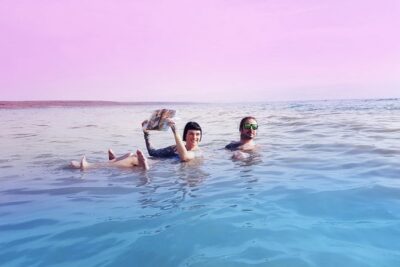

Jordan Private 4-Day Tour: Mt Nebo, Kerak, Petra, Wadi Rum, Baptism Site, Amman
Read our review →
Amman Food Tours: 3-Hours Guided Walking Food Tour in Amman
Read our review →Browse the lists this tour appears in