
Reviewed · AMMAN TOURS
Exploring Shrines, Mosques, and Holy Landmarks Private Tour
The most unusual part of this private Amman tour is its mix of active mosques, quiet shrines, and places tied to stories shared across Islamic and Biblical traditions. In one day, you can visit the Seven Sleepers Cave, the Blessed Tree, and the shrines of Bilal bin Rabah, Prophet Shuaib, and Prophet Joshua bin Nun.
I like the personal pace and the chance to ask questions in the car, rather than follow a large group. I also like the variety: Abu Darwish Mosque gives you a city view, while the shrines offer a quieter look at Jordanian religious life. The main caution is the long, tightly packed route. Six to seven hours is enough for the listed stops only if visits stay brief, so confirm the exact route and included sites before booking.
Key points at a glance
- Eight sacred stops: Visit the Seven Sleepers Cave, three Amman mosques, the Blessed Tree, and three prophet or companion shrines.
- Private transport: Your group travels in an air-conditioned vehicle with hotel pickup, bottled water, onboard Wi-Fi, and an English-speaking driver.
- Flexible guiding: Guides such as Anas, Moe, Mumen, Yousef, and Mohamed have been associated with the service, though your assigned driver may differ.
- Short visits, broad coverage: Most shrine and mosque stops last 30 minutes, while the Seven Sleepers Cave, King Abdullah Mosque, and Blessed Tree receive about an hour.
- Admission costs need checking: Some sites list free entry, while others are not included. Visitors without a Jordan Pass may need to pay on site.
- Best for curious, respectful visitors: This suits you if you want religious context and several lesser-visited sites, not a leisurely city walk.
What this private Islamic heritage tour is really about
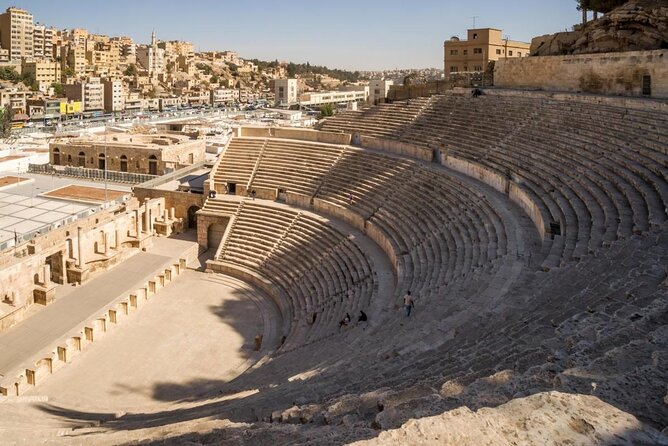
This is not a standard Amman sightseeing circuit focused on Roman ruins, markets, and hilltop views. It is a religious and cultural day built around places connected to Islamic tradition, prayer, and local memory.
That gives the tour a different rhythm. You will spend time in working mosques, so the experience depends on quiet observation and respectful dress. Some locations are visually striking, but others are modest buildings where the importance comes from the story attached to the site.
A private vehicle makes a real difference. You do not need to organize several taxi rides or work out how to connect sites outside central Amman. Your driver handles the road while you ask questions, rest between stops, or adjust the pace when possible.
The listed price is $62 per person. That is fair value for a private 6 to 7-hour outing with hotel pickup, transport, bottled water, Wi-Fi, and an English-speaking driver, especially for a small group. The value drops if your main goal is only to see Amman’s best-known mosques, since several stops are short and admission may cost extra.
A few more Amman days worth weighing up
- Amman Petra Full-Day Trip
★ 5.0 · 270 reviews - Amman Walking Tour: Hidden Gems, Culture & Street Food
★ 5.0 · 241 reviews - Joyful Roads Private Car Service
★ 5.0 · 145 reviews
Starting at the Seven Sleepers Cave
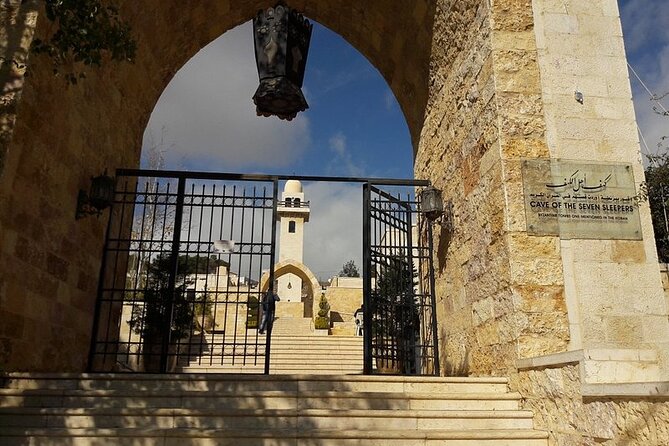
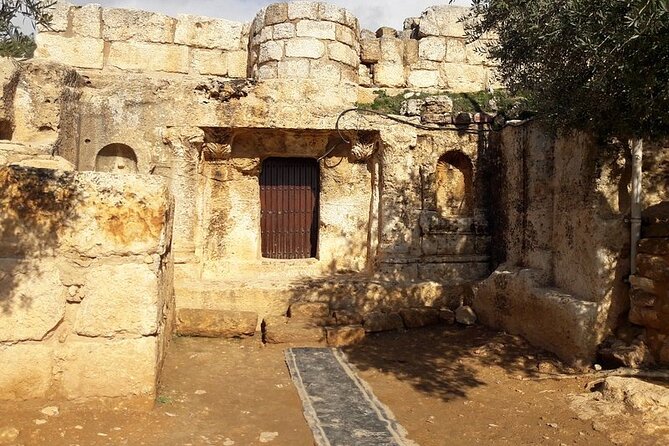
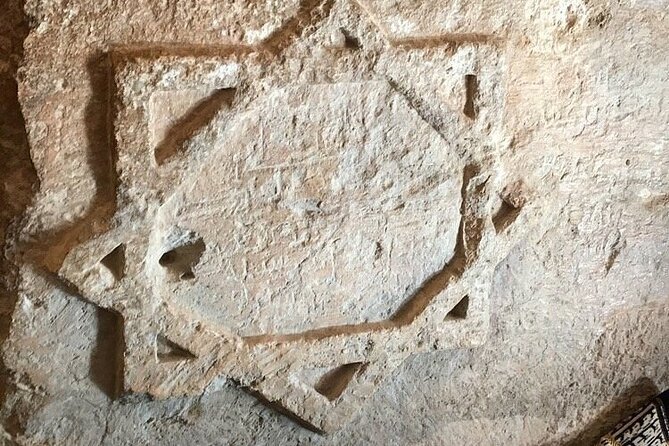
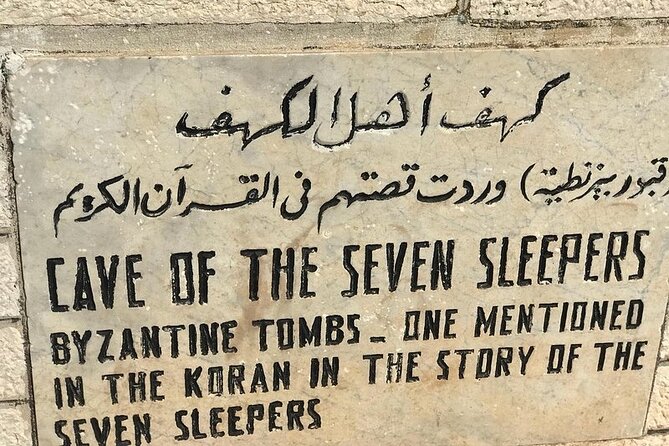
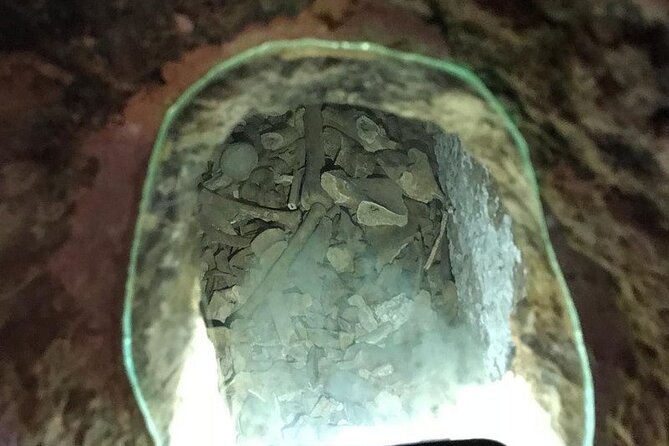
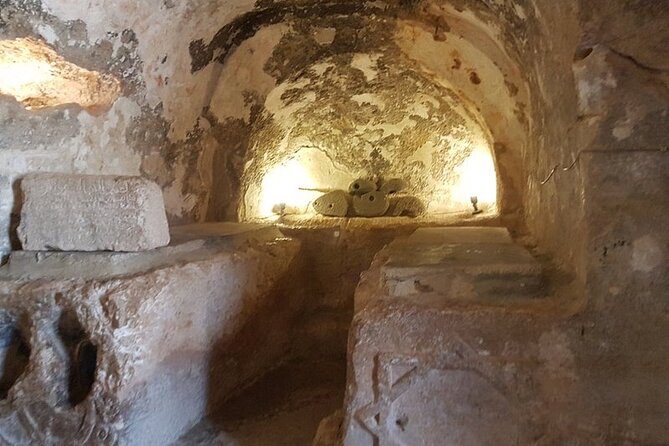
The Cave of the Seven Sleepers is a strong opening because it gives the day a story rather than simply another photo stop. The site is linked to a group of young men who hid from persecution and were believed to sleep for centuries under divine protection.
You can expect about an hour here. The site includes the cave or remains associated with the story, along with markers or displays that help explain its religious importance. The atmosphere is suited to reflection, and your guide can provide the Islamic context behind the legend.
The appeal is less about grand architecture and more about the connection between faith, storytelling, and place. You will likely find the site most rewarding if you already have an interest in Islamic tradition or enjoy seeing how sacred stories are tied to physical locations.
Do not expect a polished museum visit. The provided information does not describe extensive exhibits, and the attraction may feel simple compared with Jordan’s major archaeological sites. Still, it gives the tour a meaningful beginning and helps frame the rest of the day.
Abu Darwish Mosque and Amman from above
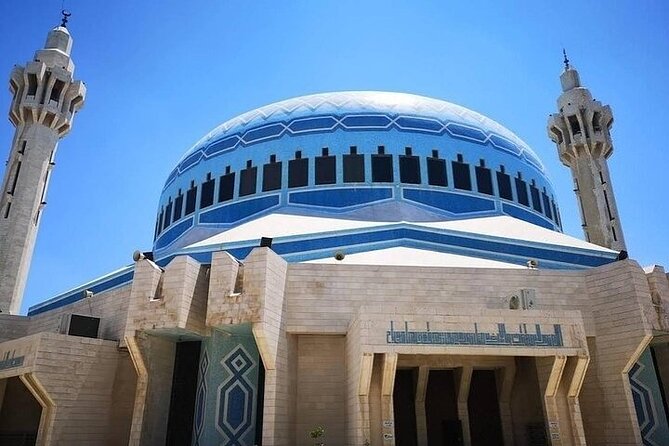
Abu Darwish Mosque brings you back into the city. It is known for its blue dome, geometric decoration, ornate chandeliers, carpets, and Quranic inscriptions. Its position in the Jabal Amman area also offers broad views across the city.
The scheduled visit is about 30 minutes, with no admission fee listed. That is enough time to appreciate the exterior, enter if access is available, and take in the setting without turning the stop into a long formal visit.
I like this stop because it combines architecture with a sense of place. Amman spreads across a series of hills, and the mosque’s location helps you understand the city better than a photograph from street level. The blue dome also gives you one of the day’s clearest visual markers.
Access inside any active mosque can depend on prayer times and local arrangements. Dress modestly, keep your voice low, and follow your driver’s advice. The tour description presents the mosque as a place of prayer and contemplation, not simply a monument open for unrestricted sightseeing.
King Abdullah Mosque and the practical details
King Abdullah Mosque, also called Al-Masjid Al-Malik Abdullah I, is one of the more imposing stops. It honors King Abdullah I and combines traditional Islamic features with modern construction. The large dome, minaret, prayer hall, chandeliers, carpets, and Quranic inscriptions give it a formal, spacious feel.
The planned visit is one hour. Unlike the Seven Sleepers Cave, admission is not included in the listed price. The tour information also says that anyone without a Jordan Pass must pay on site, so check your pass and ask about entry costs before the day begins.
This mosque may be the best stop for you if you want to focus on architecture. It is also described as a cultural and educational center, with Quranic studies and community programs. That makes it more than a decorative building, although your time there may be shaped by prayer schedules.
The distinction between a free visit and a visit with admission not included matters. The tour price is modest for private transport, but you should carry funds for any required entry and avoid assuming every site is covered.
More private tours around Amman:
- Jordan Tour: Private Driver – Luxurious car
★ 5.0 · 88 reviews - Private Walking Tour in Amman With Local
★ 4.5 · 77 reviews - Jordan Private 4-Day Tour: Mt Nebo, Kerak, Petra, Wadi Rum, Baptism Site, Amman
★ 5.0 · 72 reviews - Amman Airport Private Arrival Transfer
★ 4.5 · 72 reviews
The Grand Husseini Mosque in downtown Amman
The Grand Husseini Mosque sits in downtown Amman and functions as an important place of worship and community life. Its design includes geometric decoration, calligraphy, chandeliers, and a large prayer hall.
You have about 30 minutes here. That short stop works well as part of a larger religious circuit, but it will not leave much time for a detailed architectural inspection. The mosque is most useful as a quick connection between Amman’s modern city center and its Islamic identity.
Its downtown location also changes the feel of the tour. After the quieter cave and the more formal King Abdullah Mosque, this stop puts you near the city’s everyday religious life. The visit may be affected by prayer times or special events, so flexibility helps.
Admission is not included according to the tour details. Ask your driver early in the day how the stop will be handled. That small conversation can prevent confusion later, particularly if your group wants to enter rather than view the exterior.
The Blessed Tree at Al Buqayawiyya
The Tree of Al Buqayawiyya, known as the Blessed Tree, is one of the more distinctive stops on the route. It is a centuries-old tree linked in local tradition to the Prophet Muhammad and regarded as a place of blessing and prayer.
The visit is scheduled for about an hour. You will learn about the tree’s role in local tradition and its symbolic importance in Jordanian Islamic culture. The setting is described as peaceful, giving you a chance to pause after the city mosques.
This is a good example of why the tour is different from a standard city tour. The attraction is not a grand building or archaeological complex. Its importance comes from belief, memory, and the way a community treats a natural site over time.
Admission is not included. The details do not specify a fixed fee, so ask before arriving. You should also approach the site with the right expectations. This is a place for quiet reflection, not a conventional attraction with a long list of facilities or activities.
Bilal bin Rabah Shrine and the story of the first muezzin
The Shrine of the Companion Bilal bin Rabah honors one of the best-known figures in early Islamic history. Bilal is remembered as the first muezzin, the person who called Muslims to prayer, and for his firm faith and dedication.
The visit lasts about 30 minutes. The shrine is intended as a place of respect and spiritual reflection, so the experience is likely to be quiet and focused. Your guide can explain why Bilal’s story has such importance in Islam and how the shrine fits into Jordan’s network of sacred places.
This stop will appeal most if you want the tour to have a human story at its center. You are not only looking at a building. You are connecting a physical site with a person whose role in Islamic tradition remains widely remembered.
Entry is not included in the published details. As with the other shrines, dress and behavior matter. Keep the visit calm, avoid treating the site like a casual photo stop, and let your guide explain local customs.
Prophet Shuaib’s shrine near Madaba
The Mosque and Shrine of Prophet Shuaib is associated with Shuaib, known as Jethro in Biblical tradition. The site is described as being near Madaba and as a peaceful place for prayer and reflection.
The visit takes about 30 minutes. The mosque is presented as simple but meaningful, with the shrine providing the main focus. You can learn about Shuaib’s role in both Islamic and Biblical traditions, which gives this stop a wider religious context than a single-faith monument.
The cross-tradition connection is the reason to pay attention here. Jordan often links Islamic, Christian, and Biblical places within the same cultural setting, and this shrine shows how those traditions can overlap in local memory.
The route deserves special attention. The full list includes locations associated with Amman, Madaba, and Karak, yet the stated duration is only 6 to 7 hours. Ask the operator to confirm which sites are included in your chosen option and how much driving is expected. The published wording says a visit is included if the option is selected, so the exact booking selection matters.
Prophet Joshua’s shrine near Karak
The Mosque and Shrine of Prophet Joshua bin Nun is described as being near Karak. Joshua is remembered for leading the Israelites into the Promised Land, and the site honors his leadership and faith in both Islamic and Biblical settings.
You have about 30 minutes here. The mosque is described as simple in design, with a quiet setting for prayer and reflection. Compared with the Amman mosques, this stop is likely to feel more rural and less formal, though the supplied details do not promise specific facilities or views.
This is an important stop for anyone interested in how sacred geography crosses religious boundaries. It also adds variety to the day, taking you beyond Amman’s urban core.
At the same time, location is the practical issue. If your tour includes both the shrine near Madaba and the one near Karak, travel time can become a large part of the day. I would confirm the route, departure time, and final stop list before paying, particularly if you want meaningful time at every location rather than quick arrivals and departures.
Guides, cars, and the private-tour advantage
The service provides hotel pickup, an air-conditioned vehicle, bottled water, onboard Wi-Fi, and an English-speaking driver. For a day involving several religious sites, those basics matter. You can store bags in the vehicle, cool off between stops, and avoid the strain of arranging transport across several parts of Jordan.
Guides and drivers associated with the service include Anas, Moe, Mumen, Yousef, and Mohamed. Anas is noted for strong Islamic knowledge and punctual service. Moe is described as friendly, helpful, and experienced, with a spotless, comfortable car. Mumen has been praised for a relaxed pace, while Mohamed is known for patience with children and airport-to-road-trip support.
Your assigned guide may not be any of these people, so do not book on the assumption that you will receive a particular driver unless the company confirms it. Still, the range of names suggests that the service has several English-speaking staff members who can handle both driving and conversation.
The private format is especially useful for couples, families, or small groups with a shared interest in Islamic heritage. You can ask for explanations, take a little longer at a shrine, or keep moving if a stop is not your priority. Group discounts may also improve the per-person value.
Timing, costs, and what to bring
The experience lasts approximately 6 to 7 hours, with visits ranging from 30 minutes to one hour. That sounds generous, but eight listed stops create a full day once road time is added.
I would start with three questions:
- Which of the eight sites are included in the option I am booking?
- Which admissions are free, and which must I pay on site?
- Does the 6 to 7-hour duration include the distant shrines near Madaba and Karak?
The $62 price includes private transportation, hotel pickup, bottled water, Wi-Fi, and an English-speaking driver. Food, drinks, tips, and anything else not listed are extra. Visitors without a Jordan Pass may also need to pay admission on site.
Wear modest clothing suitable for mosques and shrines. Bring water beyond the supplied bottle if you need it, some cash for possible entry fees, and a phone charger if you plan to use your device throughout the day. Comfortable shoes are sensible, though the tour details do not specify difficult walking.
Free cancellation is available up to 24 hours before the start time. Cancellations or changes made less than 24 hours before departure are not refunded or accepted.
Who should book this experience?
I would choose this tour if you want religious context, private transportation, and access to sacred places that are not usually the main focus of an Amman city tour. It suits families, couples, and small groups who prefer a calm vehicle-based day to a large organized excursion.
It is also a good choice if you want to discuss Islamic history with an English-speaking driver rather than simply read signs and take photographs. The experience has earned strong marks for punctuality, friendly service, clean cars, flexibility, and the ability to explain the meaning of each place.
I would think twice if you want a slow-paced day with long visits at every site. The route is ambitious, and the distant shrines may leave less time than you expect. You should also confirm admission fees and the exact sites included, since the descriptions distinguish between optional visits and attractions where entry is not covered.
Should you book the sacred landmarks tour?
Book it if the Seven Sleepers Cave, the Blessed Tree, and the shrines of Bilal bin Rabah, Shuaib, and Joshua bin Nun sound more interesting to you than another standard city loop. The private format, English-speaking driver, and flexible pace make the $62 price reasonable for a small group.
Before booking, confirm the day’s final route and whether your chosen option includes every stop. If you want a focused introduction to Jordan’s Islamic heritage and do not mind several short visits, this is a worthwhile use of a day in Amman. If you prefer major monuments, longer museum visits, or a relaxed schedule, choose a shorter custom tour instead.
FAQ
How long does the tour last?
The tour lasts approximately 6 to 7 hours.
Is hotel pickup included?
Yes. Private transportation includes hotel pickup in an air-conditioned vehicle.
Is this a private tour?
Yes. Only your group participates in the activity.
Which sites are included?
The listed sites are the Seven Sleepers Cave, Abu Darwish Mosque, King Abdullah Mosque, Grand Husseini Mosque, the Blessed Tree, Bilal bin Rabah Shrine, Prophet Shuaib’s Shrine, and Prophet Joshua’s Shrine. The booking option should be checked to confirm the exact sites included.
Are admission fees included?
Some locations list free admission, while others state that admission is not included. Anyone without a Jordan Pass must pay applicable fees on site.
Can I cancel for a full refund?
Yes, if you cancel at least 24 hours before the experience start time. Cancellations or changes made less than 24 hours before the start time are not refunded or accepted.
Just added around Amman
- Jerusalem & Bethlehem Full-Day Tour from Amman or Dead Sea★ 5.0 · 5 reviews
- Amman Airport Pickup Or Drop off -To Or From Dead Sea★ 5.0 · 4 reviews
- From Petra to Wadi Rum, then back to Amman or the airport.★ 5.0 · 16 reviews
- Private Transfer From Petra to Amman or Airport With Optional★ 5.0 · 4 reviews
- Private Departure Transfer: Petra Hotels to Amman Airport★ 5.0 · 4 reviews
- Amman and Aqaba airport lift to Petra and Wadi Rum★ 5.0 · 11 reviews
- Private Departure Transfer: Dead Sea Hotels to Amman Airport★ 5.0 · 10 reviews
- Queen Alia Airport Transfers From / To Amman, Petra, Dead Sea.★ 5.0 · 3 reviews
Amman Tours, compared.
Amman Walking Tour: Hidden Gems, Culture & Street Food
Read our review →

Jordan Private 4-Day Tour: Mt Nebo, Kerak, Petra, Wadi Rum, Baptism Site, Amman
Read our review →
Amman Food Tours: 3-Hours Guided Walking Food Tour in Amman
Read our review →Browse the lists this tour appears in